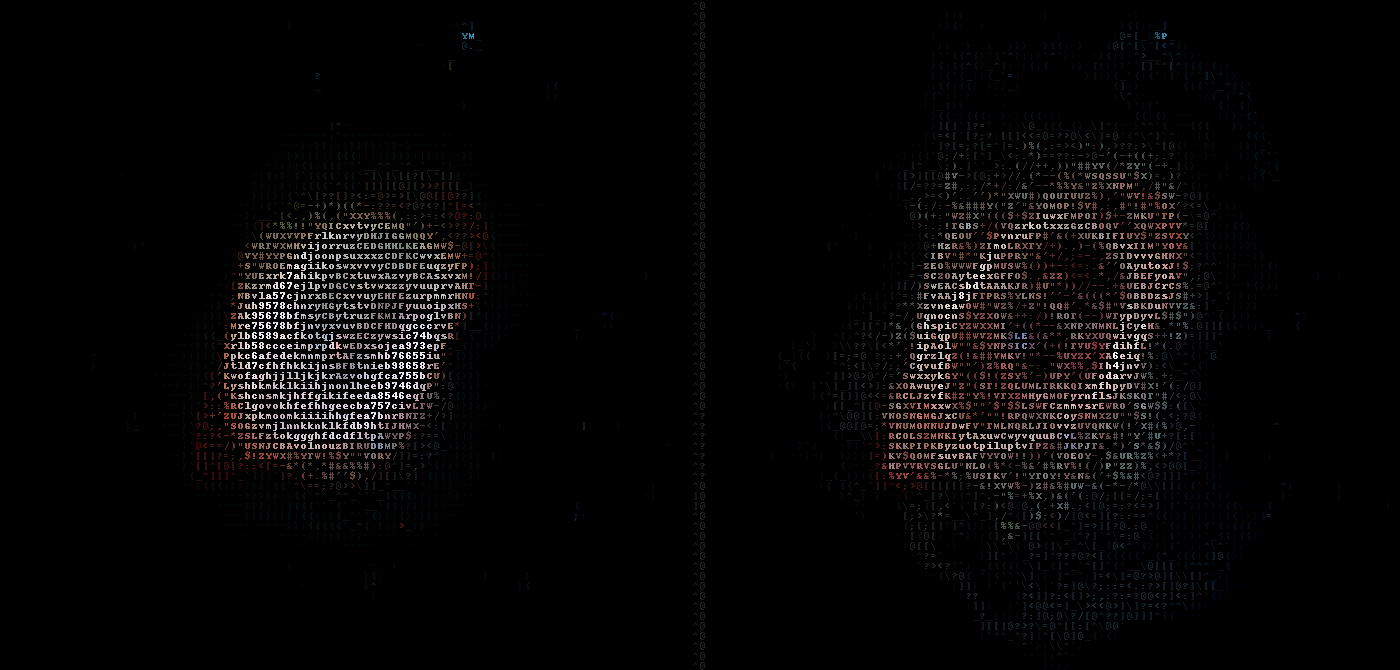
The Webb Space Telescope offers dramatically different views of the same scene! Each image combines near- and mid-infrared light from three filters.
At left, Webb’s image of the Southern Ring Nebula highlights the very hot gas that surrounds the central stars. This hot gas is banded by a sharp ring of cooler gas, which appears in both images.
At right, Webb’s image traces the star’s scattered outflows that have reached farther into the cosmos. Most of the molecular gas that lies outside the band of cooler gas is also cold. It is also far clumpier, consisting of dense knots of molecular gas that form a halo around the central stars. “One of the things that drew my attention was the strong difference between the images of the hot ionized gas and the cold molecular gas,” explained Isabel Aleman of Federal University of Itajubá (UNIFEI), Brazil. “The hot gas is very smooth, but the cold gas shows these mini clumps, spikes, and arcs. Webb’s images are very, very rich in detail.”
By accounting for the temperatures and gas contents in both areas, inside and outside the band, and by combining Webb’s data with precise measurements from other observatories, she and the research team were able to create far more accurate models to demonstrate when gas was ejected by the central star (which appears red in the image at left).
What about the third star that is visible at the lower-right edge of the band within the nebula? From Webb’s vantage point, it appears within the scene, but isn’t part of the nebula itself. It’s merely “photobombing” this party.
Two views of the same object, the Southern Ring Nebula, are shown side by side. Both feature black backgrounds speckled with a few tiny bright stars and distant galaxies. Both show the planetary nebula as a misshapen oval that is slightly angled from top left to bottom right. At left, the image shows two stars that are almost overlapping at the center. The top left star appears white and the bottom right star appears red. A large almost solid white oval surrounds the central stars. It takes up about a quarter of the view. The edges of this region are irregular. At the top right and bottom left, there are redder areas. Toward the top left and bottom right, the image is a little greener and more transparent.
At right, there is only one star at the center of the planetary nebula. A large translucent pink-and-red irregular oval surrounds the central stars. This approximately matches the size of what’s shown in the image at left. A lot more material extends outward from this region in the right image. It has similar regions that jut out at bottom left. The entire planetary nebula takes up almost half the image. Long green spokes extend all along the right side, and shorter areas of green have been ejected toward the top and top right.
Two views of the same object, the Southern Ring Nebula, are shown side by side. Both show the planetary nebula as a misshapen oval that is slightly angled from the top left to the bottom right. At left, the image shows two stars that are almost overlapping at the center, and an almost solid white oval surrounding them. At right, the image shows one star at the center, a large translucent pink-and-red irregular oval, and wavy patterns that extend all around the edges.
This image was created with Webb data from proposal 2733 . It is part of Webb Early Release Observations.
The Early Release Observations and associated materials were developed, executed, and compiled by the ERO production team:
Jaclyn Barrientes, Claire Blome, Hannah Braun, Matthew Brown, Margaret Carruthers, Dan Coe, Joseph DePasquale, Nestor Espinoza, Macarena Garcia Marin, Karl Gordon, Alaina Henry, Leah Hustak, Andi James, Ann Jenkins, Anton Koekemoer, Stephanie LaMassa, David Law, Alexandra Lockwood, Amaya Moro-Martin, Susan Mullally, Alyssa Pagan, Dani Player, Klaus Pontoppidan, Charles Proffitt, Christine Pulliam, Leah Ramsay, Swara Ravindranath, Neill Reid, Massimo Robberto, Elena Sabbi, Leonardo Ubeda.
The EROs were also made possible by the foundational efforts and support from the JWST instruments, STScI planning and scheduling, Data Management teams, and Office of Public Outreach.